
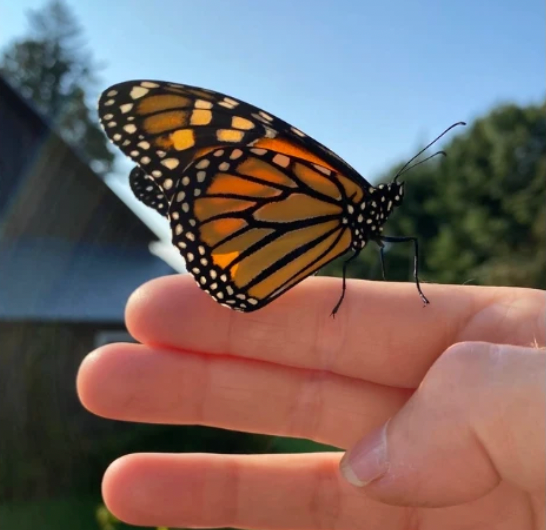
The Amazing Life Cycle of the Monarch Butterfly
Monarch butterflies are one of nature’s most remarkable insects. Their transformation from a tiny egg to a beautiful orange-and-black butterfly is called metamorphosis. This incredible journey happens in four distinct stages.

The life cycle begins when a female monarch butterfly lays a tiny cream-coloured egg (usually) on the underside of a milkweed leaf. Milkweed (Asclepias) is essential because it is the only plant monarch caterpillars eat.
What happens?
- The egg is about the size of a pinhead.
- It usually hatches within 3–5 days.
- The tiny caterpillar emerges ready to eat.
Stage 2: Caterpillar (Larva)
 After hatching, the monarch caterpillar's main job is to eat and grow.
What happens?
- The caterpillar eats milkweed leaves almost constantly.
- It sheds its skin several times as it grows.
- Its distinctive black, white, and yellow stripes become more noticeable with each growth stage.
Fun fact: A monarch caterpillar can increase its body weight thousands of times before it is ready for the next stage.
Stage 3: Chrysalis (Pupa)
 When the caterpillar is fully grown, it finds a safe spot and forms a chrysalis.
What happens?
- The caterpillar hangs upside down in a "J" shape.
- It sheds its final skin to reveal a jade-green chrysalis.
- Inside the chrysalis, the caterpillar transforms into a butterfly.
This stage usually lasts about 10–14 days.
Stage 4: Adult Butterfly

The adult butterfly emerges from the chrysalis with soft, folded wings.
Fun fact: Male monarchs have 2 spots that are visible when they open their wings. Females do not.
What happens?
- The butterfly pumps fluid into its wings.
- The wings expand and dry.
- Once ready, the butterfly takes its first flight.
Adult monarchs feed on flower nectar and help pollinate plants as they travel from flower to flower.

Migration
Monarch butterflies are famous for their annual migration. Monarchs born in Canada and the northern United States can travel thousands of kilometres to overwinter in central Mexico. In spring, future generations begin the journey north again.
How You Can Help Monarch Butterflies
You can support monarch populations by:
- Planting native milkweed in your garden.
- Growing nectar-rich flowers that bloom throughout the season.
- Avoiding pesticides whenever possible.
Just a reminder that you need a licence to raise monarch butterflies from caterpillar to adult butterfly. They are a protected species, and it is illegal to raise them. You can get a licence by clicking on the following website which is Toronto Entomologist Association: https://www.ontarioinsects.org/permit/
The monarch butterfly’s life cycle is a beautiful reminder of the wonders of nature and the importance of creating habitats that support pollinators in our gardens and communities. 🦋
Great website for further information on the Monarch:



Leave a comment
This site is protected by hCaptcha and the hCaptcha Privacy Policy and Terms of Service apply.